“Colours prompt us to philosophise… “
Wittgenstein

As Michel Pastoureau tells us, “colours are formidable revealers of our mentality. He explains to us how religion has placed them under his control, as it has done as well with love and private life. How science and philosophy have not agreed about its nature: wave or particle? light or matter? Everything is governed by an unwritten code of which colours hold the secret “. But colour, not very much loved by philosophers, who have always relegated it to a second level preferring the sign and the line, has always been one of the fundamental cognitive tools for the artist, who used it to orient himself, to project himself into other dimensions, from the transcendent one of the Byzantine-medieval abstract dimension to the romantic biological one, up to the multidimensional and surprising hypotheses formulated by quantum physics. From the infinite iconographies and the different ways of coloring the world, it is possible to reconstruct the evolution of metaphors on the destiny of man. So colour is, above all, culture.
Colour is a fundamental element in the artistic work and research of Claudia Bonollo. Not just colour as pigment or matter, the chromatic hue that beautifies things, but colour as light, colour as the primary element of vision and metamorphosis, colour that grants visibility to things still hidden, colour as a threshold suspended between diverse and seemingly irreconcilable worlds, colour that is unclassifiable, elusive, impossible to pin down. Whether we acknowledge it or not, ‘colour stimulates and shakes the immobile frame of language’ (Roland Barthes), so in truth, no colour is neutral.
The study of colour encompasses and understands an infinity of topics, being present in every aspect of human knowledge: from philosophy to natural sciences, from biology to medicine, from anthropology to psychology, from physics to color theory, from design to visual ergonomics, from architecture to art. In the best case, color is considered a tint, a hue, and its domains are strictly related to the fine arts. Unfortunately, until now, it has been difficult to have a real education on color to explore the infinite possibilities of its applications.
It is no coincidence that we “see red,” “turn yellow with fear,” or “feel blue”… Colours convey taboos and prejudices that we follow unconsciously and possess hidden meanings that influence our environment, behavior, language, and imagination. Art, architecture, advertising, clothing, cars… everything is regulated by the secret code of colours.
What is color? Is color a language?
Colour influences our environment and shapes our perception, whether by chance or intentionally. It holds complex associations and symbolism and conveys messages more effectively than words.
Recent studies have confirmed that our reaction to color, even if we are not aware of it, is total: it influences us both psychologically and physiologically. Even when we do not have specific color sensitivity… Considering colour as a “mere aesthetic factor,” reducing it to a phenomenon subject to personal interpretation, or merely as a decorative and therefore secondary element, is wrong and counterproductive. Colour influences our mood, alters our emotions, makes us more talkative or reserved. It exhilarates us or depresses us. We need to learn to be aware of colour. Another common mistake is passively following color trends in design and fashion. or thinking that white and black, and the common belief that choosing a range of grays so frequent in our contemporary landscape, exempts us from the effects of their choice.
MY INNER COLOUR
Seventh day, the unseen Sabbath.
Nanni Cagnone, poet
Nothing more unveiled, a misty expanse.
Yet she summons, an azure spread here, a road’s trailing course, things appear.
In Claudia/Sophia’s call, colours adhere.
So, to her, those concealed from sight,
Shall inquire for insight and light,
In her touch vibrant, they ignite.
Vehicle of emotions, colour has been since my early childhood a personal tool to orient me in the world. Not only or not so much the colour, pigment or matter, the chromatic layer which was looked upon with suspicion by the Ancient philosophers and our culture until the last century, and that I also studied, loved, practiced and defended during my studies. But the colour-light, the colour as the primary element of vision.
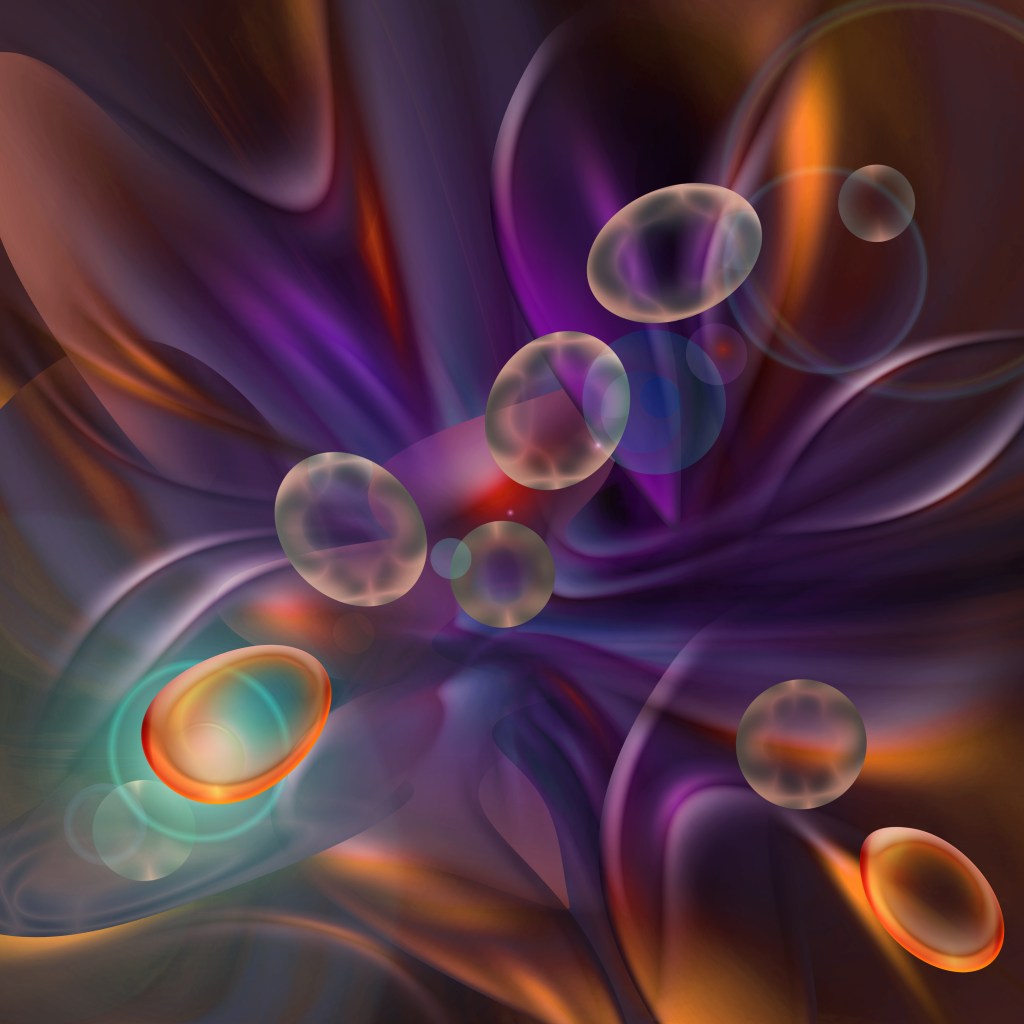
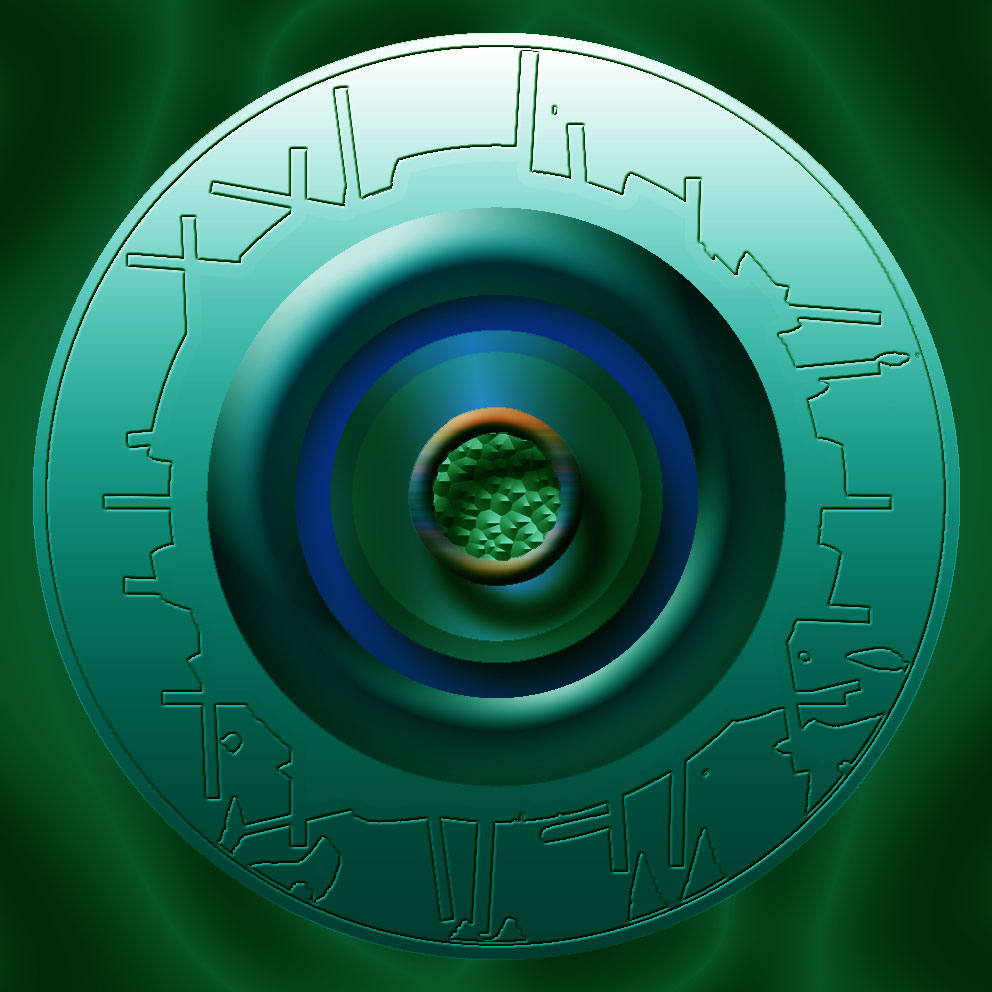
More than seeing the colour, I feel it, I perceive its harmonies, its vibratory and sound qualities, I remember it because I cannot forget its reverberation and I venture into its light immateriality. In my research, in my architecture and in my installations, colour becomes a synaesthetic space, an intimate and changing place, capable of speaking directly to our emotions.
Colour therefore interests me not only as a cultural tool but also and above all as a generator of an inner transformation. The chromatic worlds contain material, spatial, emotional, spiritual potentials and are converted into authentic places of the soul, between internal and external vision.
Perhaps because I’m a woman, art is a concave dimension for me, a willingness to listen. In my training, my sources of inspiration were not only the architects, scientists and therapists I admired but the possible visions of art, poetry, the new perspectives of biology and quantum physics, the works of James Hillman and Henri Corbin, the reeding of Ib’n Arabi, Sohravardi and Najmoddin Kobrâ, who have contributed to an artistic work that is even more attentive to the most visionary phenomena of light and colour. An attitude that agrees with my Venetian origin, in which colour is not just a hue without movement, but vibration, reverberation, the result of the contraction and extension of light and has the same qualities that we confer on architecture, we could go further and affirm that colour, in its essence, is architecture itself in its most fluid dimension. In the latest experiments, thanks to the intense collaboration with musicians and singers (harmonic and a cappella singing) we have included the sound, the emotion of the voice, echo of these chromatic reverberations.


 CLAUDIA BONOLLO ATELIER