Monamour Natural Design
2010-2022
about Monamour Natural Design
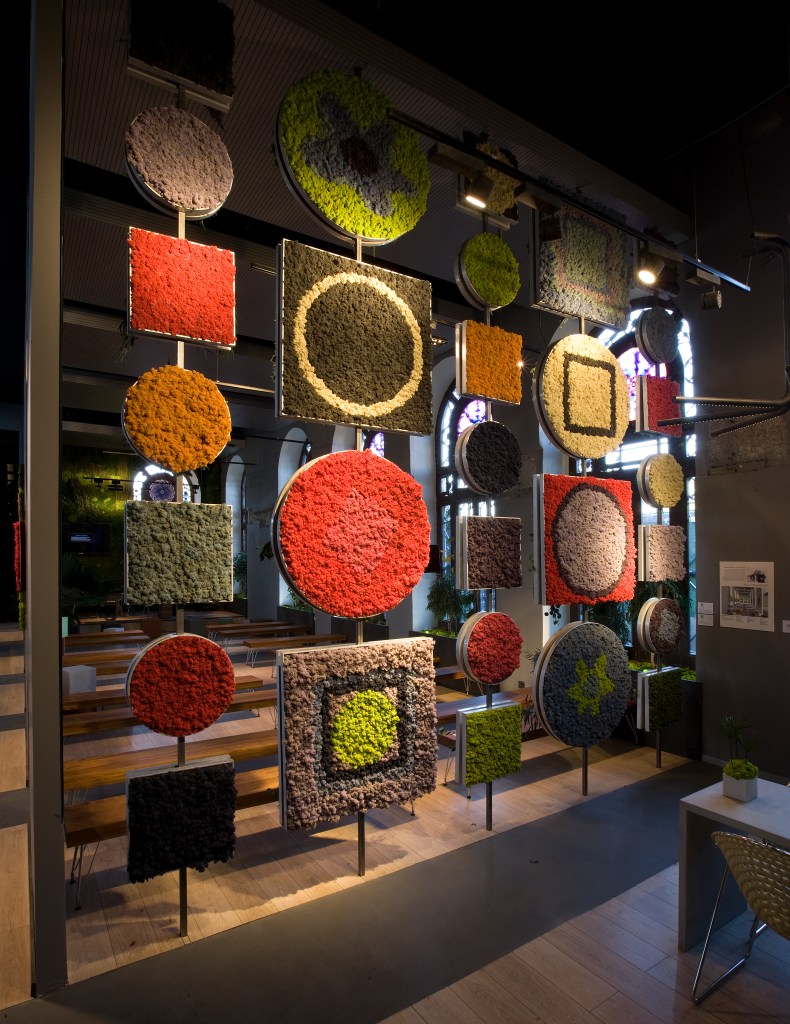
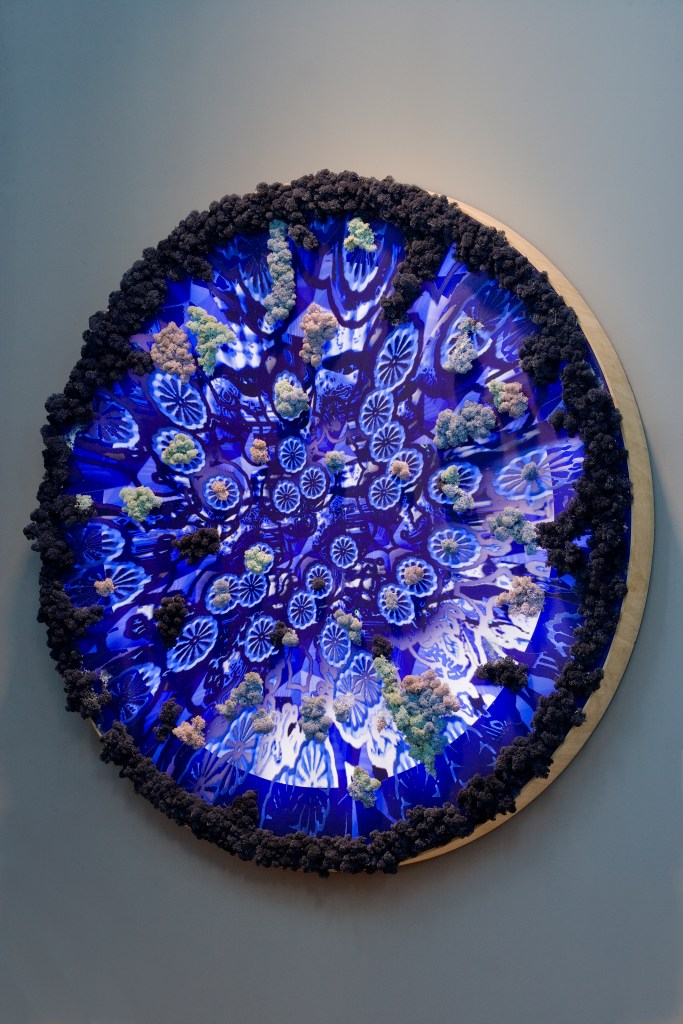
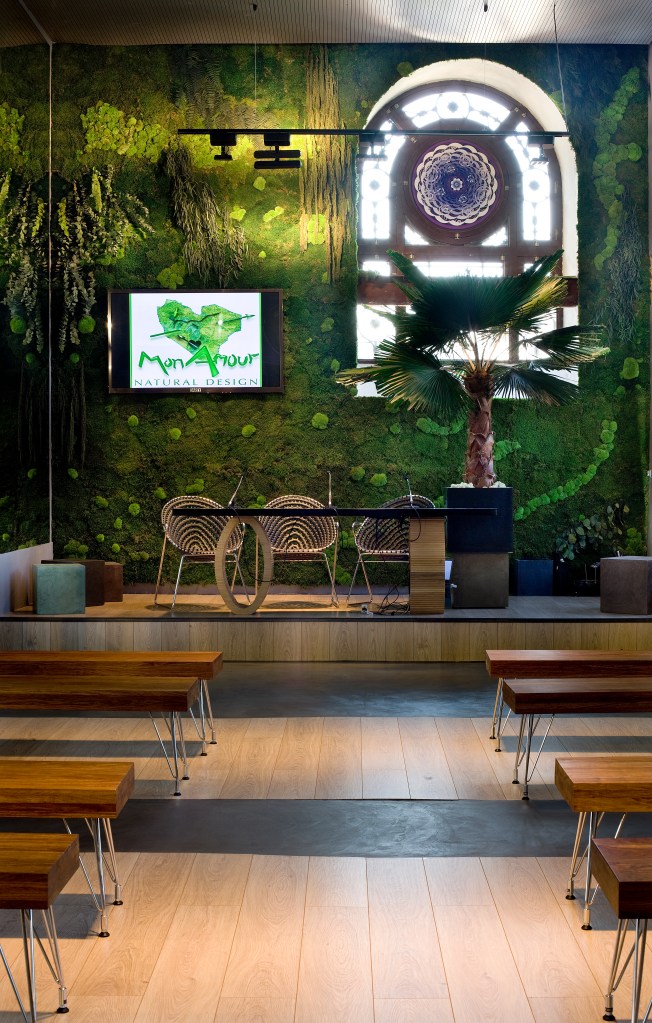
Monamour Natural Design es un estudio pionero de eco & biophilic design que opera a escala internacional. Cada proyecto, fruto de una incesante investigación y de técnicas muy minuciosas, se convierte en una creación sostenible y a medida que incorpora elementos de la naturaleza al objeto artístico y de diseño, involucrando todos los sentidos y empleando un lenguaje contemporáneo. Sus instalaciones orgánicas, donde el estudio del color es fundamental para convertir el espacio en un espacio sensible, invitan a la contemplación y activan sensaciones de bienestar, creando ambientes muy distintos y versátiles: oníricos, temáticos y empáticos pero siempre ecológicos y respetuosos con el medioambiente.
Monamour Natural Design is a pioneering eco & biophilic design studio working in an international context. Each project, the result of a continuous research and very innovative techniques, becomes a sustainable creation as it incorporates elements of nature into the artistic and designed final object, involving all senses and using a contemporary language. In Monamour Natural Design’s organic creations, the study on colour plays a central role. Spaces are turned into sensitive spaces ideal for contemplation and activate feelings of well-being, giving life to very different and versatile surroundings. Each project is inspired by a theme, always ecological and respectful towards nature and the environment, producing dreamlike and empathic installations.

THE GREEN CATHEDRAL






HORTUS CONCLUSUS
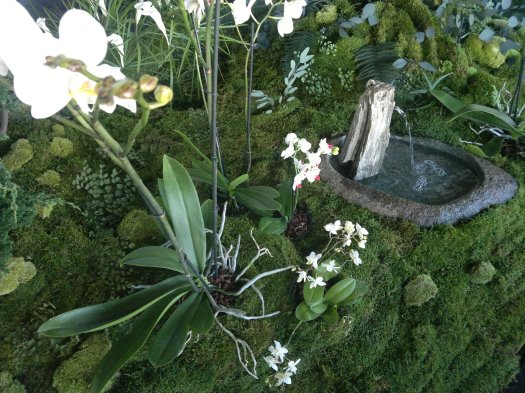
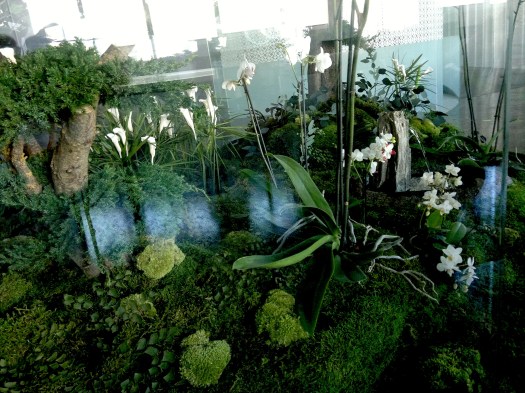
El hortus conclusus representa un lugar sin tiempo donde la naturaleza y sus sugerentes metáforas se hallan en un espacio protegido por un recinto. En la Edad media se utilizaba este concepto para aludir a espacios sagrados y simbólicos donde estimular los sentidos y elevar las virtudes humanas. Sin embargo, el deseo de un lugar bello que invita a la contemplación es más antiguo y aparece por primera vez en la Odisea de Homero. El jardín de Alcinoo, muy celebrado en la Antigüedad, era considerado un sitio ideal para la reflexión y la meditación. Este jardín escapaba a las reglas de la naturaleza y del tiempo, representando el sueño de una eterna primavera, uno de los deseos y de las esperanzas más intensos de la humanidad. No se trataba de un mero espacio decorativo sino de un auténtico jardín metafísico donde la evocación de la belleza y de la armonía invitaba a una contemplación activa que involucraba todos los sentidos. En nuestros proyectos, nos proponemos reinterpretar este concepto de “eterna primavera” creando elaborados jardines metafísicos contemporáneos que activen los sentidos. En este caso en concreto, y con técnicas muy minuciosas, algunos elementos vivos se mezclan con plantas naturales preservadas y con el sonido de una pequeña fuente de agua, en una puesta en escena sensible que obliga el espectador a interrogarse sobre la naturaleza de los elementos que componen la instalación. Nuestra idea es despertar una de las calidades más sorprendente de la imaginación: la curiosidad y, a la vez, la capacidad de asombro. Y contribuir así a transformar el hortus conclusus en un hortus deliciarum, un jardín de las delicias. (c.b.)


CHROMATIC SYMPHONY
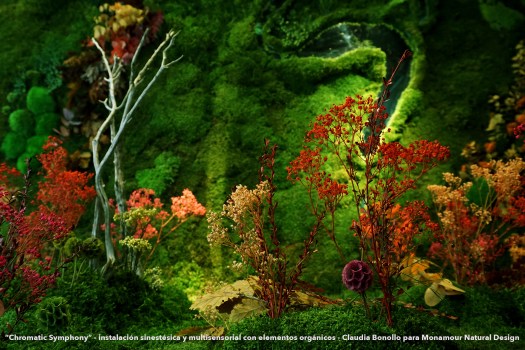
If during a concert we had the chance to observe air while it simultaneously vibrates influenced by voices and instruments, with great wonder we would see colours setting up and moving in it. Athanasius Kircher
The space at our disposal is one of the two main windows of the company, the one introducing to the main entrance. It’s an open irregular prism closed by two crystal walls. In this area we can experiment and explore in complete freedom all the compositional, chromatic and sensorial possibilities to be included inside a garden. Wonder and contemplative peace enacted by our organic installations make the audience particularly receptive and well-disposed, in a setting where perfumes, colours and sounds do match. After having completed our first multi-sensorial installations that combined natural landscapes with new technologies – creating gardens enlightened by suspended planets and light-boxes with flowers and preserved plants – and after having researched the theme of a seasonal garden, our last thematic landscapes find their inspiration in art. Our last creation – CHROMATIC SYMPHONY – is a dreamlike garden that analyses multiple relations between COLOUR and SOUND. There is a symmetrical relation between sound and colour. The music that goes along with colour can be found in the artistic works of Scriabin, Schoenberg and Stravinsky, and so the relation between painting and music permeates the works by Kandinsky and Klee. The two phenomena have a common origin and present surprising affinities. Both phenomena are regulated by the same laws and metrics. Both originate from vibrations that spread in space with an undulating movement and their measurement even if expressed in a different way (…) has the same basis (…), the relation of the frequency in a spectrum is identical to that of musical frequencies. When we talk about this relation we unwittingly refer to a phenomenon called SYNAESTHESIA, from the Greek syn-sisthomai: to perceive simultaneously. We have always related colour. All our gardens and organic installations are borne out of a deep interest in colour and its invisible harmonies. Our compositions do not only include the colours of moss, leaves and flowers but also reflect the way they relate with the environment and space. They are actually empathic spaces where each colour becomes an emotion. As the great painter Yves Klein said: “Colours are the true inhabitants of space. The line can only travel and cross it, it only goes by.” Our aim is thus the creation of “dreamlike landscapes” that change and redefine spaces. They are continuous metamorphoses that disorientate and amaze, immersing the onlooker in magical atmospheres that explore hidden dimensions behind the green surfaces and the colour of leaves and flowers. By means of a set of wavy mirrors representing out of scale sinuous rivers, placed and partly hidden among the garden’s sensual reliefs, what is “elsewhere” is included inside the installation. Unobtrusive lightning with little spots set in place in strategic areas, helps to define a landscape in becoming. All the mirrored images change continuously revealing amazing and ephemeral visual alchemies.

One can perceive thus a hidden reality, shaped by a kaleidoscopic mosaic of transitory appearances and then, once that the image and landscape have been altered, the audience will see a reproduction with a new and different visual dimension. The public contemplates views of a mirrored world, like Alice in Wonderland, the protagonist of Lewis Carroll’s famous story, living in another reality through the looking glass. As the plan behind our gardens actually is to show not only what is visible but to refer to and show what is not yet. (Claudia Bonollo)
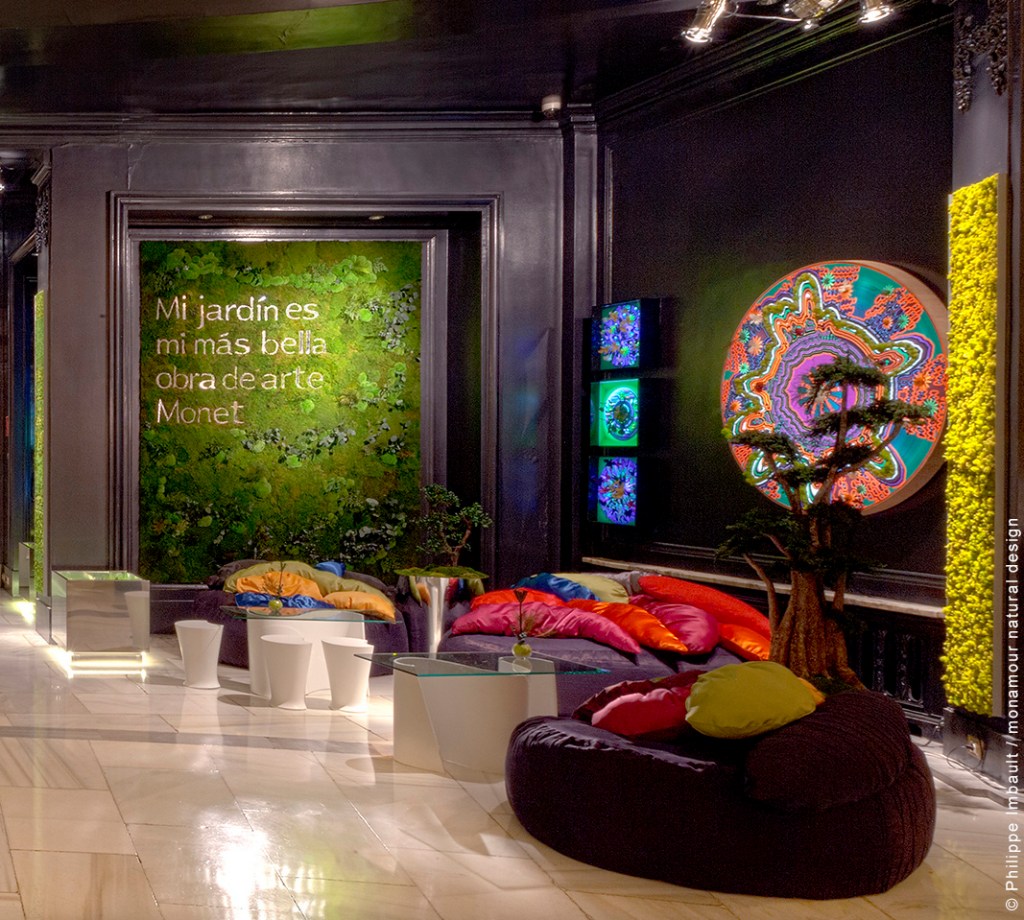
THE POP UP GARDEN AT THE WESTIN PALACE
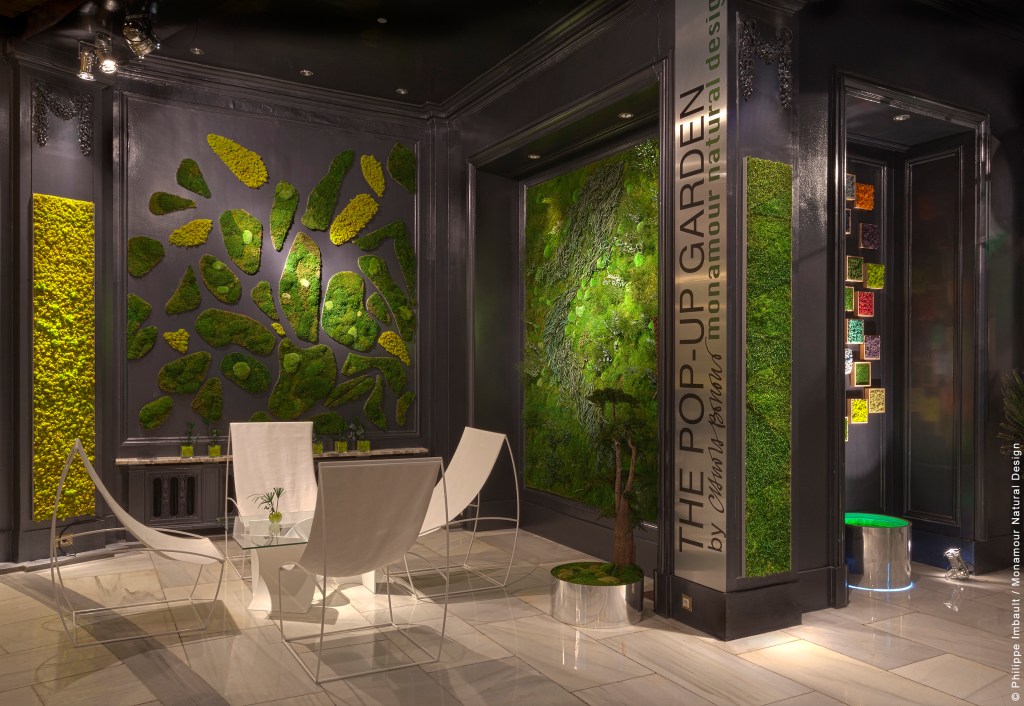


SELINUNTE 2019 INTERIOR LANDSCAPES


THE FLYING CARPETS EN ESTAMPA


FLORA – LA DIOSA DE LA ETERNA PRIMAVERA

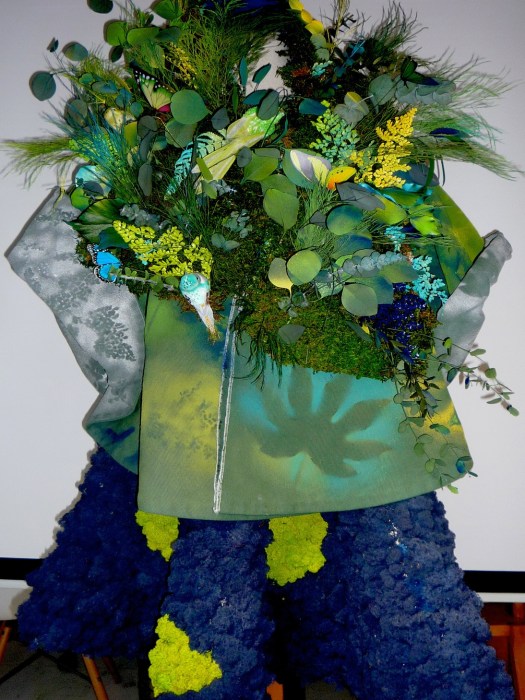
ADONIS’ GARDENS


Schedule a free consultation

Contact
info@claudiabonollo.com
+34
Calle del Desengaño 6 – 6º
Madrid 28004 (Spain)
 CLAUDIA BONOLLO ATELIER